What Is a Wedding Arch Called in Ceremony Decor?
What is a wedding arch called in ceremony decor? Explore arbors, chuppahs, pergolas, and more stunning backdrop options here.
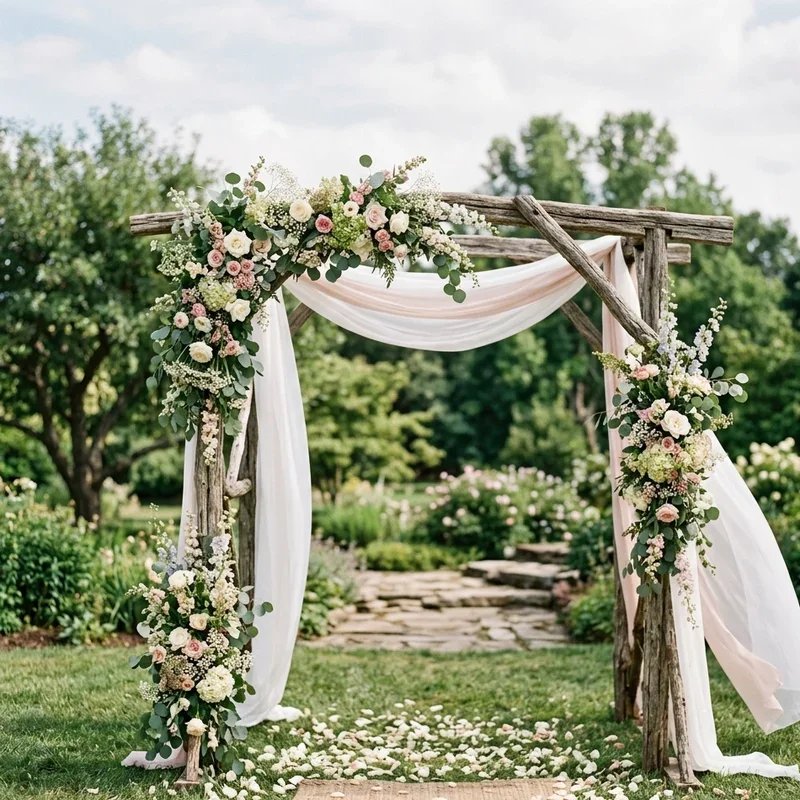
Picture this. You are scrolling through wedding inspiration on Pinterest or Instagram, and you keep seeing these absolutely gorgeous structures standing behind couples as they exchange vows. Some are draped in flowing fabric. Others are overflowing with lush flowers and greenery. A few are sleek and geometric, looking like something straight out of an architecture magazine. They are all breathtaking, but what on earth are they actually called?
If you have ever found yourself asking "What Is a Wedding Arch Called in Ceremony Decor?" you are far from the only one. The wedding industry has a whole vocabulary for these beautiful structures, and the terminology can get pretty confusing when you are knee-deep in planning mode. Is it an arch? An arbor? A pergola? A chuppah? And does the name even matter when all you really care about is how amazing it looks in your ceremony photos?
Well, here is the deal. The name actually does matter, at least a little bit. Knowing what to call the structure you want helps you communicate clearly with your florist, your venue coordinator, and your rental company. It saves you time, prevents misunderstandings, and ensures you end up with exactly the ceremony backdrop you have been dreaming about. So let us walk through every type of wedding arch out there, learn the proper names, and figure out which one is perfect for your big day.
The Classic Wedding Arch Where It All Started
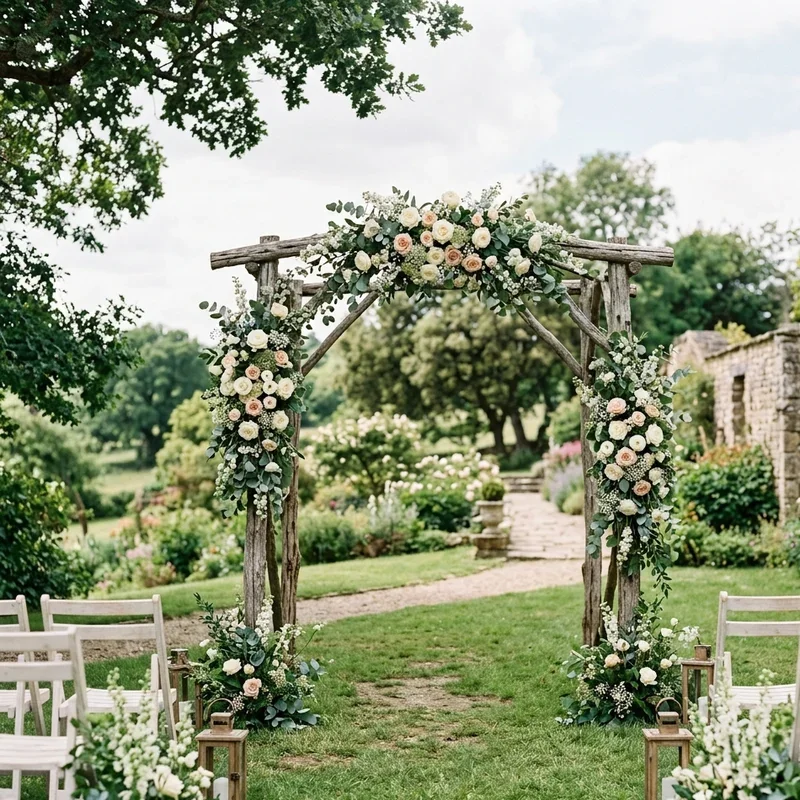
When most people hear the phrase "wedding arch," they picture a simple curved structure that the couple stands beneath during the ceremony. And honestly, that is a perfectly accurate starting point. The traditional wedding arch is exactly what the name implies: an arched frame, typically freestanding, that creates a beautiful focal point at the altar.
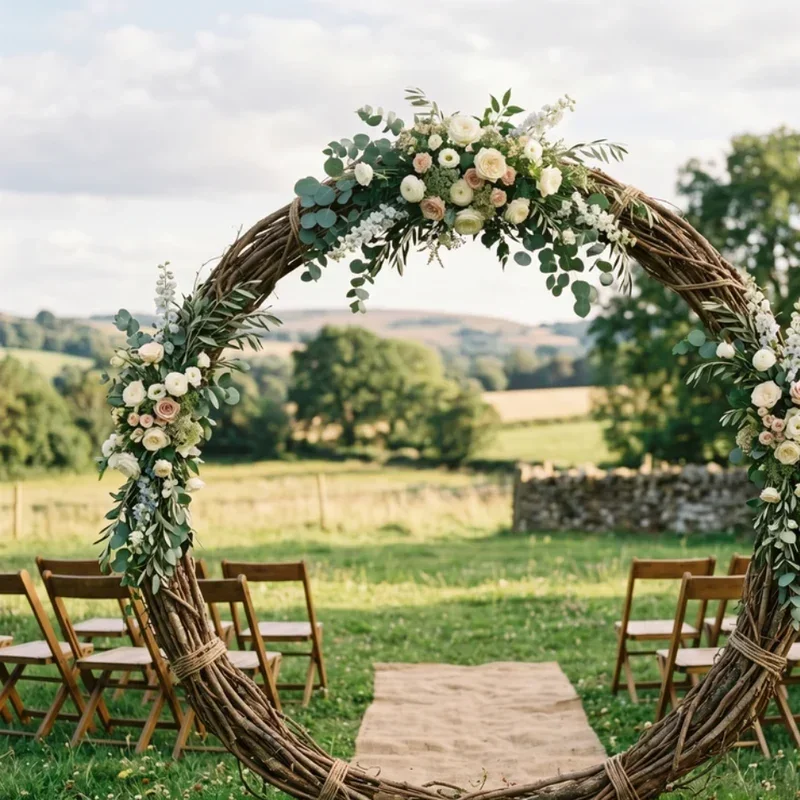
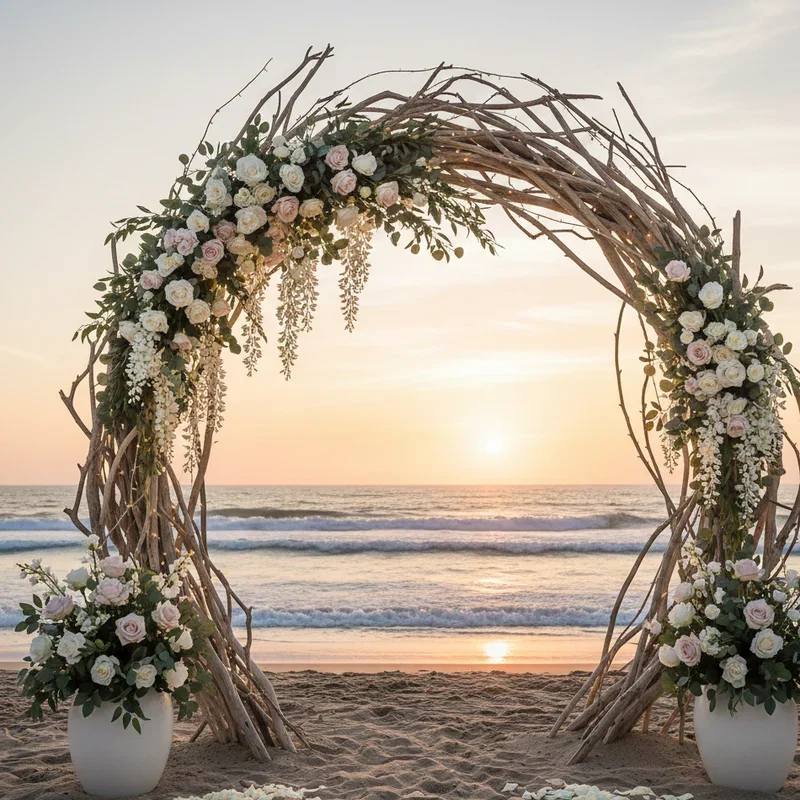
Classic wedding arches come in a variety of materials. You will find them made from wrought iron, wood, metal tubing, PVC pipe, and even woven branches depending on the aesthetic you are going for. The arch shape itself is universally flattering in photographs because the curve naturally draws the eye inward toward the couple standing beneath it.
Historically, the wedding arch symbolizes the threshold between the couple's old individual lives and their new shared journey together. Walking through or standing beneath an arch represents that transition, which is why the tradition has stuck around for centuries across so many different cultures. There is something undeniably romantic about that symbolism, even if most modern couples choose their arch purely for the visual impact.
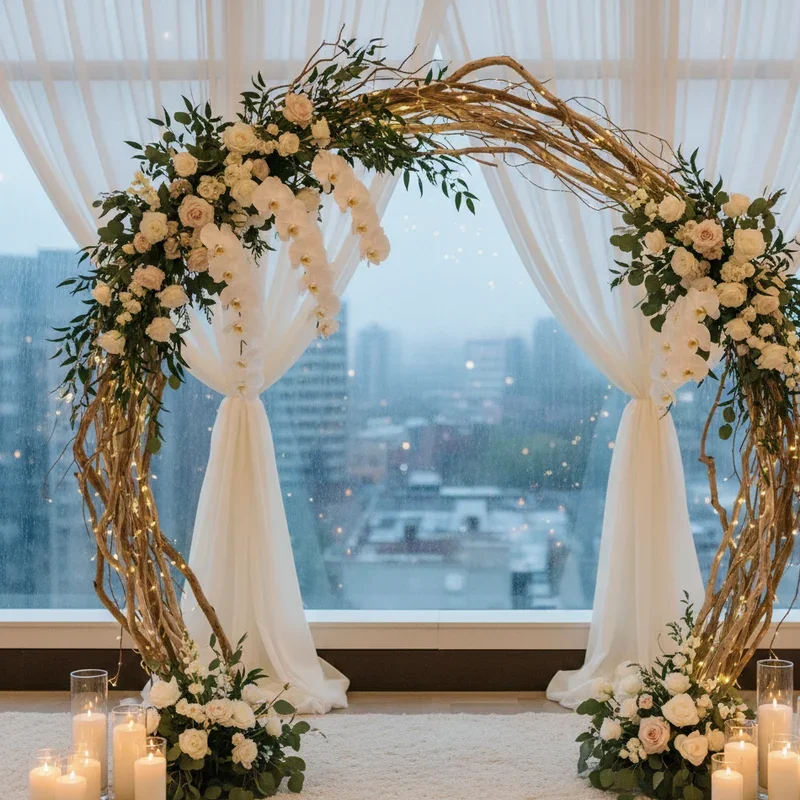
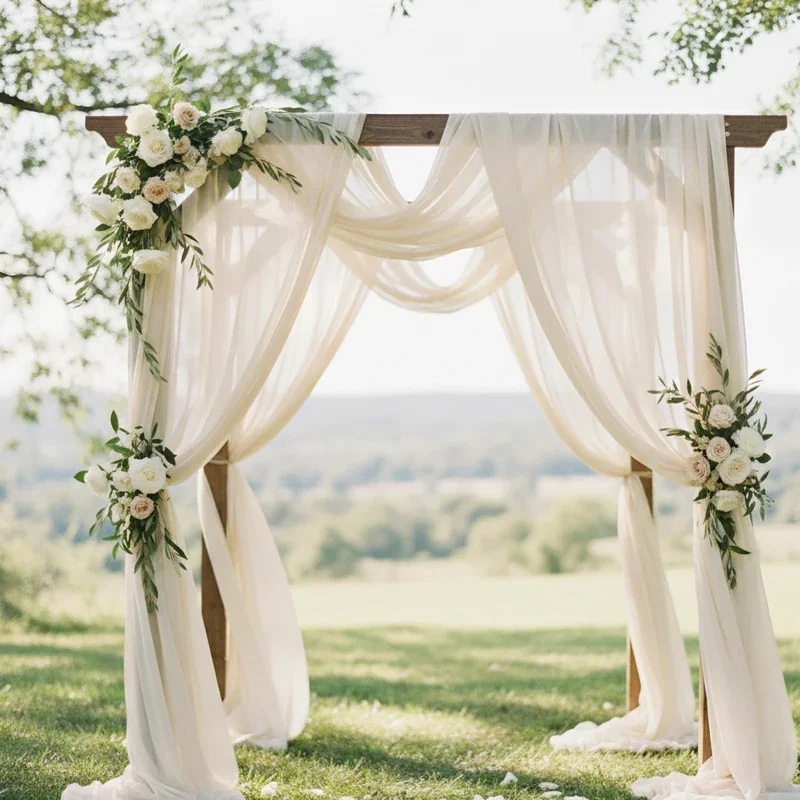
The beauty of a classic arch is its versatility. You can dress it up with elaborate floral arrangements and cascading greenery for a garden wedding, wrap it in sheer fabric and fairy lights for a romantic evening ceremony, or leave it bare for a minimalist, modern vibe. The arch itself is just the skeleton. What you do with it is where the magic really happens.
What Is a Wedding Arch Called in Ceremony Decor? Breaking Down Every Type
Now let us get into the specifics. The wedding world has borrowed terms from architecture, religion, and garden design to describe all the different structures couples use as ceremony backdrops. Each one has its own look, its own history, and its own set of design possibilities. Understanding the differences helps you zero in on exactly what you want and communicate that vision to your vendor team.
The Arbor
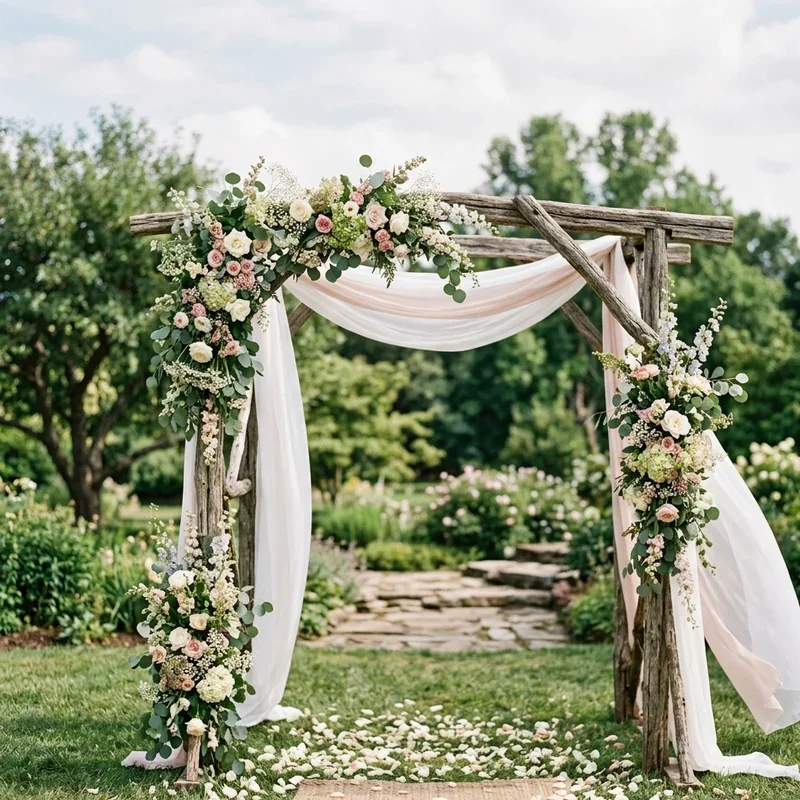
An arbor is one of the most popular choices for outdoor weddings, and for good reason. It is a freestanding garden structure, typically made of wood or metal, with an open framework that can be decorated with climbing plants, flowers, or draped fabric.
Arbors tend to have a more rustic, organic feel compared to sleek metal arches. They often feature latticework or crosshatch panels on the sides, which gives vines and greenery something to cling to. If you have ever seen a beautiful garden entrance covered in climbing roses or wisteria, you have seen an arbor in action.
For weddings, arbors work beautifully in garden settings, vineyards, farm venues, and backyard celebrations. They blend seamlessly into natural surroundings and create a sense of being enveloped by nature as you say your vows. Many couples love the intimate, almost secret-garden quality that a well-decorated arbor provides.
Size-wise, arbors are usually just wide and tall enough for two people to stand beneath comfortably. They are smaller and more intimate than pergolas, which makes them ideal for ceremonies that prioritize coziness over grandeur.
The Pergola
Speaking of pergolas, let us talk about these impressive structures. A pergola is a larger, more substantial framework with columns or posts supporting an open roof of beams and rafters. Unlike an arbor, which is typically a standalone archway, a pergola creates an extended covered area that can shelter several people.
In wedding settings, pergolas serve as dramatic ceremony backdrops that make a serious visual statement. They are particularly popular at venues that have permanent pergola installations in their gardens or courtyards. Standing beneath a pergola covered in draping fabric and floral arrangements creates a sense of grandeur that is hard to replicate with a smaller structure.
Pergolas are also incredibly practical for outdoor weddings. While they do not provide full shelter from rain, their slatted roof structure offers partial shade from the sun, which your guests will absolutely appreciate during a midday summer ceremony. Nobody wants to be squinting and sweating through your vows, and a pergola takes the edge off without sacrificing the open-air atmosphere.
Because of their size and weight, pergolas are usually permanent fixtures rather than rentals. If your venue has a beautiful pergola, consider yourself lucky and build your ceremony design around it. If you are set on the pergola look but your venue does not have one, some rental companies offer modular pergola structures that can be assembled and disassembled, though they tend to be pricier than simpler arch or arbor rentals.
The Chuppah
The chuppah holds deep significance in Jewish wedding traditions, but its beauty and symbolism have made it a popular choice across many types of ceremonies in recent years. A chuppah is a canopy supported by four poles, creating a sheltered, open-sided space where the couple stands during the ceremony.
Traditionally, the chuppah represents the home the couple will build together. Its open sides symbolize the welcome and hospitality the couple will extend to family and friends throughout their married life. The fabric canopy overhead represents God's presence and protection over the union.
In traditional Jewish ceremonies, the chuppah is sometimes held aloft by four family members or friends rather than standing on fixed poles. This human element adds a deeply personal and communal feeling to the ceremony that is really quite moving to witness.
Modern chuppahs come in an incredible range of styles. You will find everything from simple tallit-draped frames to elaborate structures covered in thousands of dollars worth of florals. Some couples use family heirloom quilts or meaningful fabrics as the canopy, adding layers of personal significance to the structure.
Even if you are not having a Jewish ceremony, the chuppah style offers a gorgeous design option. The four-post, canopy-top silhouette creates a defined ceremonial space that photographs beautifully from every angle. Just be mindful and respectful of its cultural and religious origins if you choose to incorporate this style into a non-Jewish celebration.
The Gazebo
Gazebos have been a wedding ceremony staple for as long as anyone can remember, and there is a reason they have never gone out of style. A gazebo is a freestanding, roofed structure, usually octagonal or circular, with open sides and a raised floor. Think of those charming little pavilions you see in public parks and historic gardens, and you have got the picture.
For weddings, gazebos provide a built-in ceremony backdrop that requires minimal additional decoration. The architecture itself is beautiful enough to stand on its own, though most couples add some floral arrangements, fabric draping, or string lights to personalize the space.
One of the biggest advantages of a gazebo is the built-in roof. If you are worried about weather but still want an outdoor ceremony, a gazebo gives you overhead protection without sacrificing the al fresco atmosphere. Rain, intense sun, and even light wind are all manageable under a gazebo.
Gazebos also create a natural stage for the ceremony. The raised floor elevates the couple above the seated guests, ensuring better sight lines and creating a sense of occasion. It is like having a built-in platform that says "something important is happening right here."
The downside of gazebos is that they are permanent structures, so you are limited to venues that already have one. You cannot exactly rent a gazebo and set it up on a beach. But if your venue has a gorgeous gazebo in good condition, it can save you a significant chunk of your decor budget since the structure itself does most of the heavy lifting.
The Mandap
In Hindu wedding traditions, the mandap is the sacred canopy structure under which the ceremony takes place. It is typically a four-pillared structure with an ornate roof, and it serves as the ceremonial heart of the wedding celebration.
Mandaps are known for their lavish, richly decorated appearance. They are often adorned with fresh flowers, draped fabrics in vibrant colors, intricate hanging elements, and sometimes even crystal or mirror accents. The overall effect is opulent, joyful, and visually stunning in a way that few other ceremony structures can match.
The mandap traditionally contains a sacred fire at its center, around which the couple performs the ceremonial walk known as pheras. This fire represents the divine witness to the marriage, and the mandap structure frames and contains this sacred ritual space.
Modern mandap designs have evolved considerably while maintaining their traditional significance. Contemporary mandaps might incorporate acrylic pillars, geometric shapes, LED lighting, or minimalist floral designs that honor the tradition while embracing modern aesthetics. Some Indian-American couples blend traditional mandap elements with Western wedding design for a ceremony space that reflects both cultural heritages.
The Geometric Arch
Here is where things get really contemporary. Geometric arches have absolutely exploded in popularity over the past few years, and it is easy to see why. These structures use angular shapes like hexagons, triangles, circles, and abstract geometric forms to create ceremony backdrops that feel fresh, modern, and distinctly different from traditional curved arches.
Hexagonal arches are probably the most popular geometric shape for weddings right now. The six-sided frame creates a beautiful honeycomb-inspired silhouette that looks incredible when dressed with asymmetrical floral arrangements. Triangle arches offer a dramatic, minimalist look that works particularly well for bohemian and modern ceremonies.
Circular or moon-shaped arches have their own special appeal. The full circle represents eternity and wholeness, which carries obvious romantic symbolism for a wedding. These round frames look stunning when partially covered with flowers and greenery, leaving portions of the circle bare for a balanced, artistic composition.
The beauty of geometric arches is that they make a statement even without heavy decoration. Their unusual shapes are inherently eye-catching, so a few well-placed floral clusters and some trailing greenery are often all you need to create a show-stopping backdrop. This can actually save you money on florals compared to a traditional arch that needs to be fully covered to look complete.
The Wedding Backdrop Panel
Not technically an arch in the traditional sense, backdrop panels have become a hugely popular alternative for couples who want a flat, wall-like structure behind them during the ceremony. These panels can be made from fabric, macrame, laser-cut wood, acrylic, dried flowers, or even living greenery walls.
Fabric backdrop panels create a soft, romantic atmosphere and work beautifully for indoor ceremonies where a freestanding arch might feel out of place. Macrame panels bring a bohemian, handcrafted quality that is absolutely perfect for beach weddings and outdoor celebrations with a relaxed vibe.
Living green walls, made from panels of lush foliage, create a dramatic, garden-inspired backdrop that looks incredible in photos. These have become especially popular for urban and industrial venue weddings where the green wall provides a stark, beautiful contrast to the raw architecture of the space.
The practical advantage of backdrop panels is their versatility in tight spaces. Unlike arches and pergolas, which require room on all sides, a flat panel can sit flush against a wall or partition, making it ideal for venues with limited ceremony space.
Choosing the Right Structure for Your Wedding Style
With so many options on the table, how do you decide which ceremony structure is right for your wedding? It really comes down to a few key factors.
Your venue sets the stage for everything. An elaborate mandap might feel out of proportion in a tiny backyard, just as a simple wooden arbor might get lost in a grand ballroom. Visit your ceremony space in person, take measurements, and think about how different structures would fit within the existing architecture and landscape.
Your wedding style and theme should guide your choice. A rustic barn wedding calls for a wooden arbor or a simple draped arch. A glamorous ballroom affair might warrant a dramatic floral arch or an ornate geometric structure. A beachfront ceremony works beautifully with a driftwood arbor or a flowing fabric canopy. Let the overall aesthetic of your celebration inform your decision.
Budget is always a factor, and ceremony structures can range from dirt cheap to astronomically expensive depending on the style, materials, and floral treatment. A simple wooden arch from a rental company might cost a couple hundred dollars, while a fully loaded floral arch designed by a premium florist can easily run into the thousands. Know your numbers and prioritize accordingly.
Consider what happens to the structure after the ceremony. Some couples repurpose their arch or arbor as a photo booth backdrop during the reception. Others donate floral arrangements to local hospitals or nursing homes. If sustainability matters to you, choose materials and designs that can be reused, repurposed, or recycled.
DIY Wedding Arch Ideas for Budget-Conscious Couples
If you are handy and want to save some money, building your own ceremony arch is absolutely doable. Plenty of couples have created stunning DIY arches for a fraction of what a rental or custom build would cost.
Copper pipe arches are one of the easiest DIY projects out there. Copper tubing from the hardware store, a few elbow connectors, and some basic tools are all you need to create a sleek, modern arch with that gorgeous warm metallic finish. The total cost is usually under fifty dollars for the structure itself.
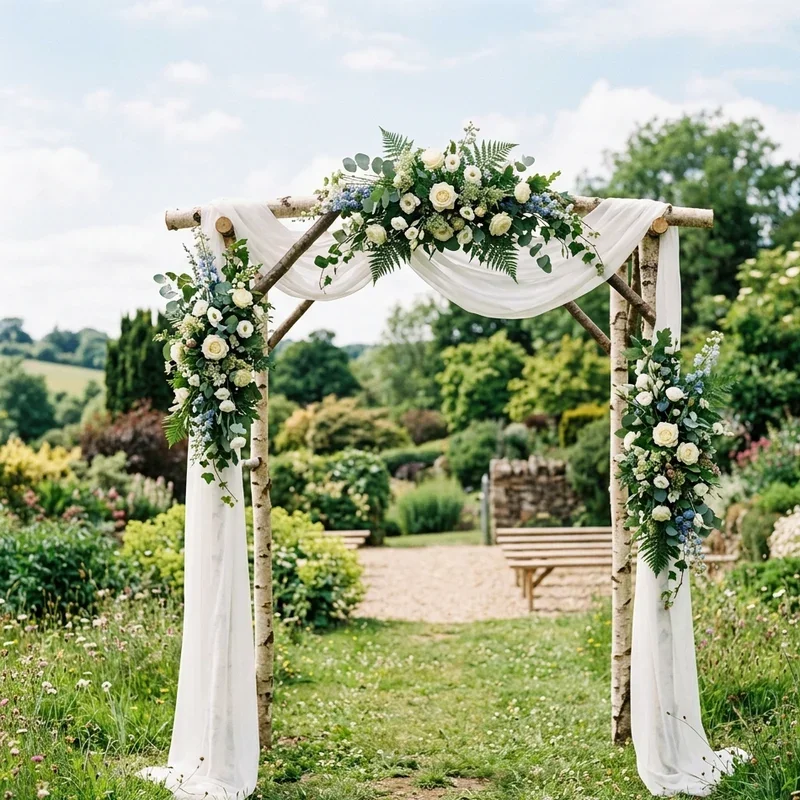
Wooden arches made from birch branches, bamboo poles, or even lumber from the home improvement store offer endless customization options. Sand them, stain them, paint them, or leave them natural. Add hooks or nails for hanging floral arrangements and fabric, and you have got a beautiful arch that looks professionally made.
PVC pipe arches are the ultimate budget option. A few lengths of PVC pipe, some connectors, and a can of spray paint in your chosen color create a lightweight, easy-to-transport arch that you can decorate however you like. Covered in fabric and flowers, nobody will ever guess it is made from plumbing supplies.
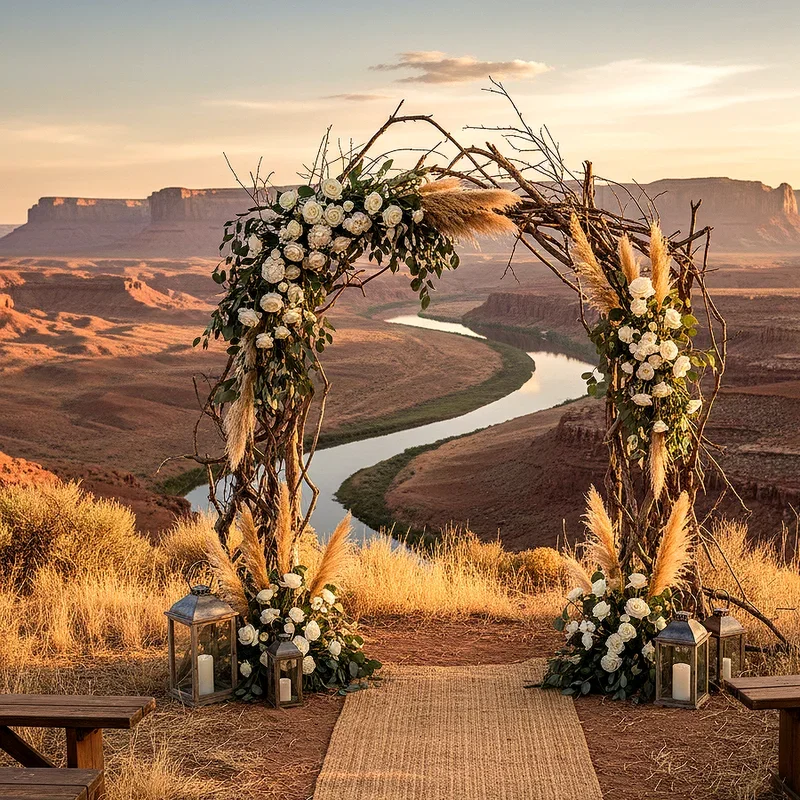
For the truly creative, foraged materials like driftwood, fallen branches, and wildflowers can be assembled into a one-of-a-kind ceremony structure that costs next to nothing. These organic, imperfect arches have a natural beauty that perfectly suits outdoor and bohemian weddings.
What Is a Wedding Arch Called in Ceremony Decor? A Quick Reference
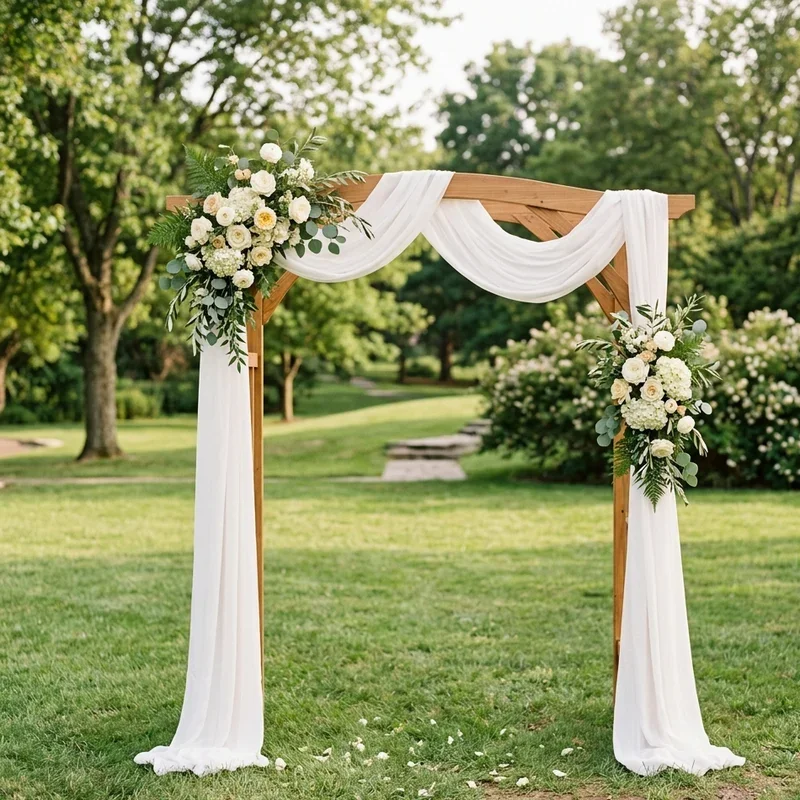
To recap everything we have covered, the world of wedding ceremony structures includes arches, arbors, pergolas, chuppahs, gazebos, mandaps, geometric frames, and backdrop panels. Each one brings its own character, history, and design potential to your celebration. The name you use when talking to vendors matters because it sets expectations and ensures everyone is on the same page about the vision.
When searching online or browsing rental catalogs, try using the specific term for the structure you want rather than the generic "wedding arch." You will get much more targeted results and find inspiration that actually matches what you are looking for.
Conclusion
Whether you call it an arch, an arbor, a chuppah, or a pergola, the structure you choose for your ceremony creates the visual anchor for one of the most important moments of your life. Each style carries its own charm, history, and design possibilities that can transform any setting into something truly magical. Take time to explore the options, match the structure to your venue and personal style, and do not be afraid to put your own creative spin on tradition. The perfect ceremony backdrop is out there waiting for you.
Read next: 15 Wedding Circle Arch Ideas for Stunning Ceremonies
Frequently Asked Questions
1.What is the most popular type of wedding arch used today?
Geometric arches and classic floral arches are currently the most popular choices for modern wedding ceremonies.
2.Is a chuppah only used in Jewish wedding ceremonies?
Traditionally yes, but many non-Jewish couples now use chuppah-style canopies for their beautiful four-post design.
3.How much does a typical wedding arch rental cost?
Basic arch rentals range from one hundred to five hundred dollars, while elaborate floral arches cost significantly more.
4.Can I build my own wedding arch for a DIY celebration?
Absolutely, copper pipe, wooden, and PVC arches are simple DIY projects costing under fifty dollars for materials.
5.What is the difference between an arbor and a pergola at weddings?
An arbor is smaller and freestanding while a pergola is larger with extended columns and an open beam roof.
Stay up to date with our latest ideas!